2026-05-06 · 6 min read
Preview coding-agent work without wiring CI, servers, and DNS first
Why coding agents need a real staging and review layer between code changes and production.
Over the past few months, coding agents have made me much faster at changing code.
But they did not make me much faster at showing the result.
That gap became especially obvious whenever I wanted to review a work-in-progress feature from somewhere other than my laptop. Maybe I was stepping away from the desk. Maybe I wanted to open the result on my phone. Maybe I wanted to send a teammate or user a link before anything was ready for production.
The code was there. The live, reviewable artifact was not.
Tools like Happy and Paseo are doing interesting work around remote-controlling coding agents. They help keep agents running while you are away. But there is still a missing step between “the agent changed the code” and “a human can open the result in a browser.”
The usual workaround is infrastructure: buy a server, set up CI, Docker images, a registry, GitHub secrets, Docker Compose, DNS, Cloudflare, NGINX, TLS, deploy scripts, and a cleanup story.
All that just to show someone a work-in-progress page.
So I built Prevu.
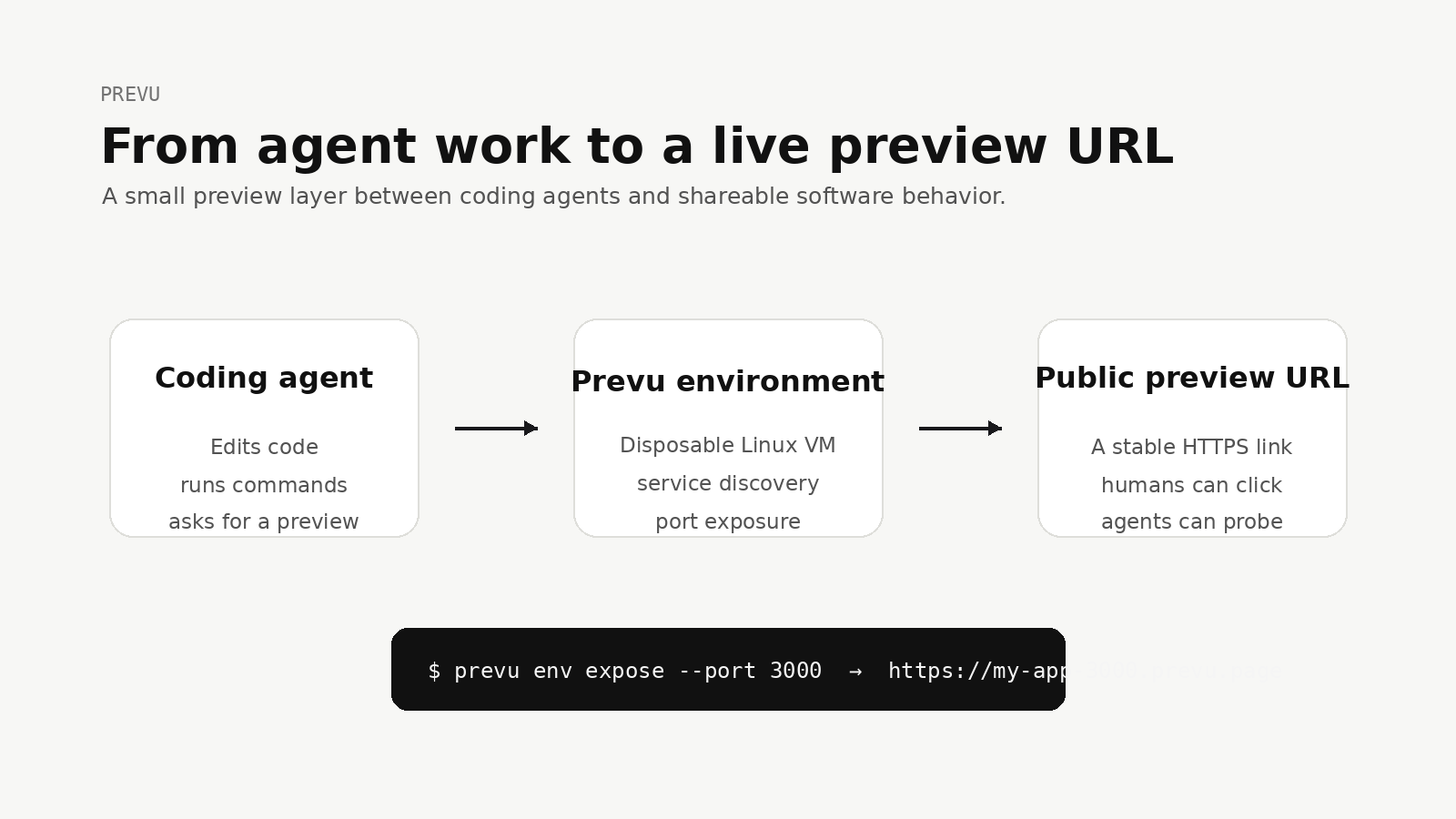
What is Prevu?
Prevu is the staging and review layer for coding agents.
It gives your agent a real environment where it can run a project, expose an HTTPS URL, inspect logs, and hand you something you can actually review.
- It is not another CI platform.
- It is not a PaaS dashboard that asks you to write YAML before seeing anything.
- It is not trying to replace production deployment.
Your coding agent should be able to say: “I need a preview environment.”
And Prevu should answer: “Here it is.”
With Prevu, a project can get a reusable VM-backed staging environment. Your coding agent can connect, install dependencies, run the app, expose the right port, and return a shareable URL.
Why this matters
Coding agents are getting very good at editing code. But software is not only text. Software is behavior.
- A frontend change needs to be seen.
- A dashboard needs to be clicked.
- A form needs to be submitted.
- A workflow needs to be tried by a human.
Pull requests are useful, but a diff is not the same thing as a running product.
Today, agents often stop right before the most important review moment. They produce code, but not a live artifact. Prevu tries to close that loop.
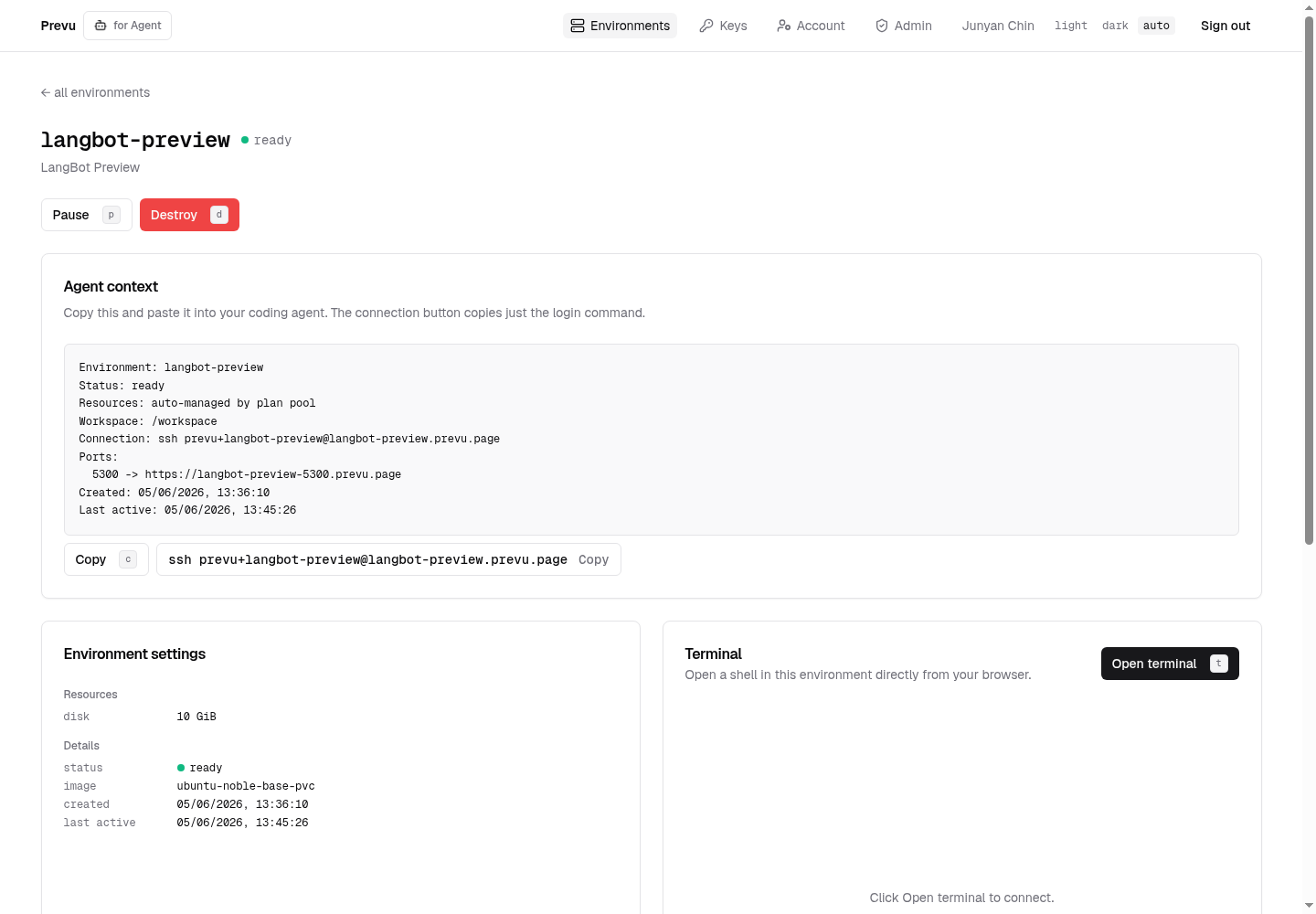
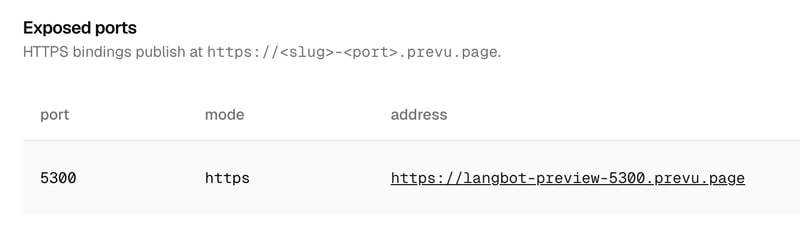
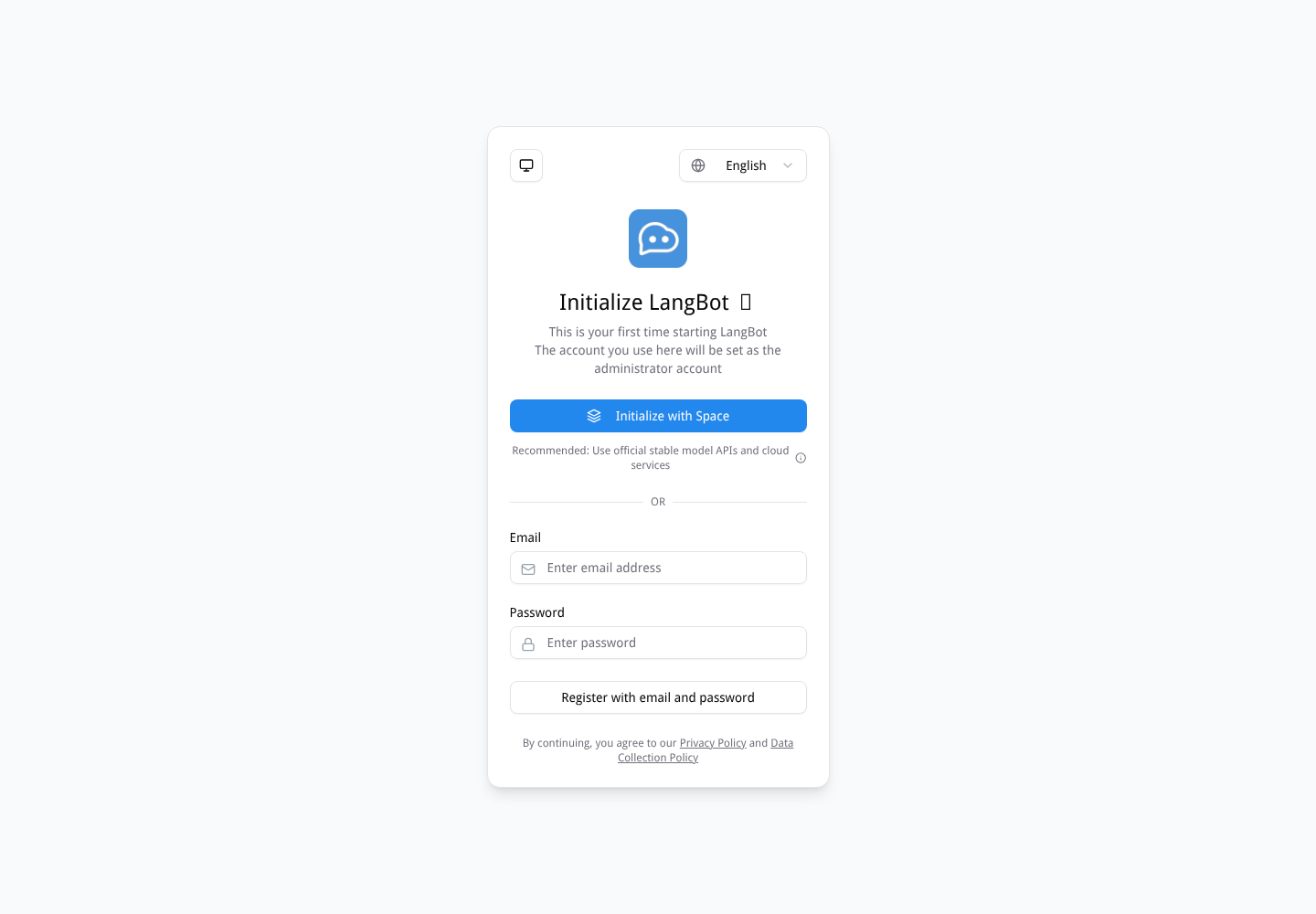
Here is a WIP branch of LangBot running through Prevu:
The workflow I want
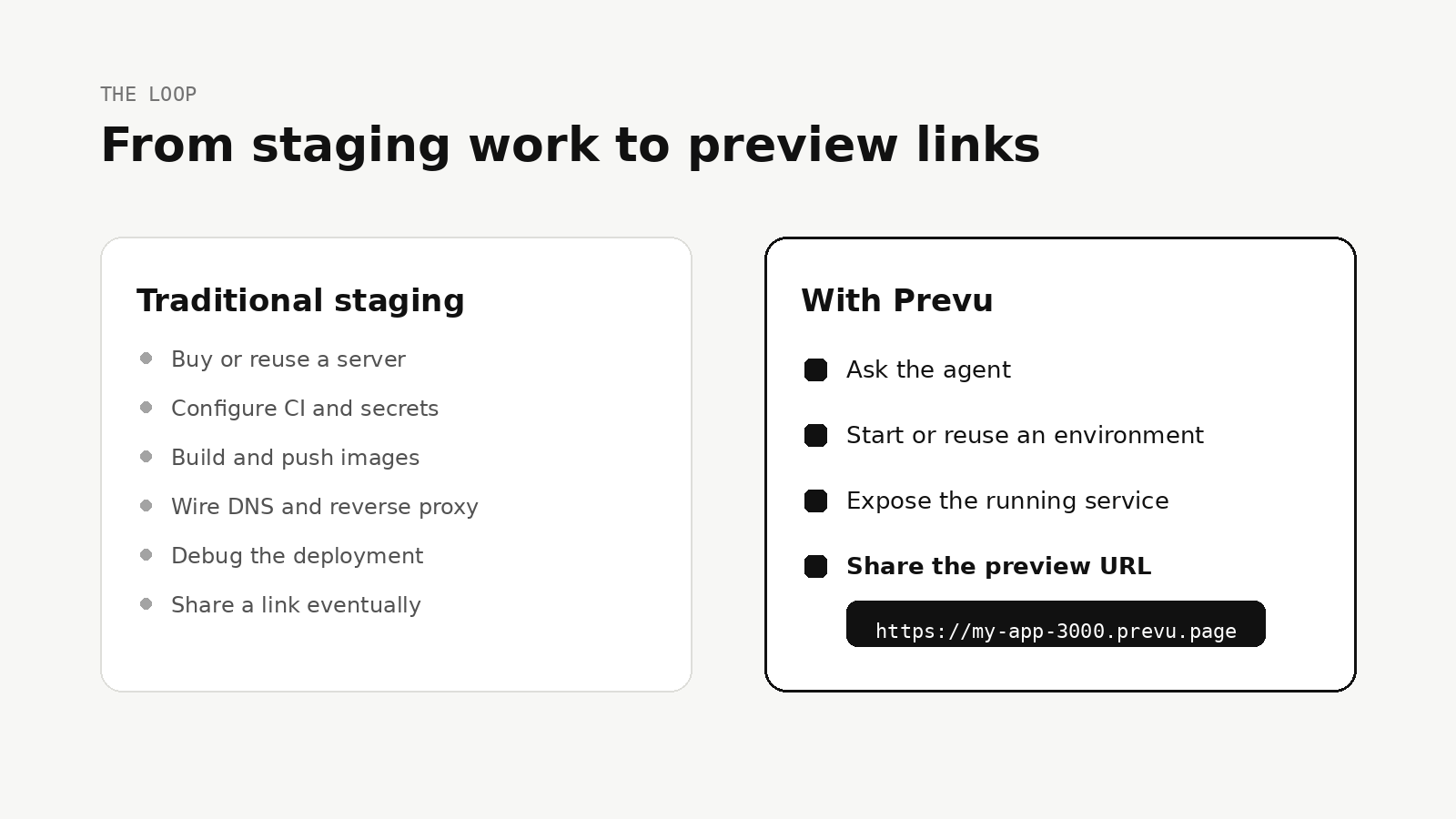
The old workflow looks like this:
- Buy a server
- Configure CI
- Push Docker images
- Write deployment scripts
- Configure DNS and a reverse proxy
- Debug everything
- Finally share a link
The workflow I want is:
- Ask your agent
- Get a preview link
- Review the running result
- Ask the agent to keep iterating
Deploy this project to Prevu and give me a preview URL.That URL becomes the shared review surface. You can open it on your laptop, phone, or tablet. A teammate can click it. The agent can curl it. Everyone is looking at the same running thing.
What Prevu is for
Prevu is for the stage before production:
- before the PR is merged
- before CI is stable
- before the idea is validated
- before you want to polish deployment
- before a production platform should be involved
In other words, Prevu is for the messy middle between “the agent wrote some code” and “this is ready to ship.”
Agent-first, not dashboard-first
One design choice I care about a lot: Prevu is built to be operated by coding agents.
There is still a dashboard for humans. Humans need to see environments, URLs, logs, ports, and status.
But the core workflow should also work through agents like Claude Code, Codex, Cursor agents, OpenCode, OpenClaw, or any other coding assistant.
The agent runs the project. Prevu provides the environment and review surface around it.
Try it
Prevu is still early, but the core idea is already useful: give your coding agent a real place to preview its work.
- Less CI debugging.
- Less server babysitting.
- Less “works on my machine.”
- More links.
- More demos.
- More reviewable software.
Try it here: https://prevu.cloud